 Brick & Mortar
How It's Made · Step 15 of 27
How the story came together - a writer role, five versions and a handbook with a blank page
storywritingclaudevoice
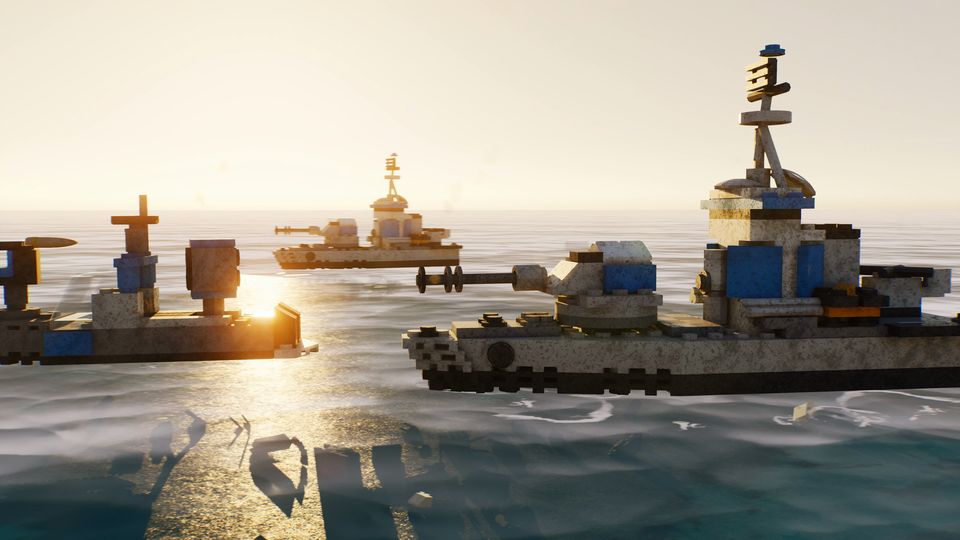
The campaign story of Brick & Mortar was drafted by Claude and decided by the owner. Both halves matter, so this step is about how they fit, with light spoilers only.
The two jobs
A writer role in our roster owns the campaign text, the mission briefings and the in-game lines, and touches nothing else. The owner does the part that cannot be handed over: choosing the cast, the plot, the tone and what is allowed to be funny. Almost all of the story's skeleton is the owner's, and almost all of the sentences are the writer's.
The standing tone, decided on 23 September, is a brisk, arch, comic-book voice that is never grim. Everyone is made of plastic and knows it.
The versions, in order
- Version 2 (24 September). The writer's first full pass. It was thrown away the next day: on 25 September the owner wrote a new spine in a few paragraphs: a rookie commander against an enemy commander, a hatred that is personal, and a late family twist. The writer's job became filling it in.
- Version 3.2 (25 September). A polish pass we asked for: more emotion, more laughs, nothing drastic. We gave Claude a short list of story-craft rules to follow: every character wants something and meets an obstacle, plant things early and pay them off, avoid repeating a joke unless it comes back as a callback. The result was a table of planted payoffs, a case for the villain that makes him sympathetic without excusing him, and three moments designed to move a player.
- Version 3.3 (27 September). After playing the first mission, the owner wrote that they wanted people to be a little scared of the rival, not to find him a joke. Every payoff that used his quiet habit as a gag was cut or reversed. A dry line of his stays only if it chills first.
- Version 4 (30 September). The owner's own notes, which we filed word for word, said the main structure is how much the rival hates the hero, and that revenge drives everything after the first defeat. Out went a humming running gag, a subplot in which a character investigates the two commanders, and most of a snow-globe backstory. The two final bosses merged into one mission, which took the campaign to thirteen missions.
- Version 4.2 (30 September, approved). The owner's verdict: the story is looking pretty good, so get the frames in and build the missions. 218 storyboard shots followed.
- Version 4.3 (2 October). The owner's note after the storyboard round: a mission ends in failure for the heroes, which changes how the next one opens.
Each of those is a document in the repository with the owner's words quoted at the top.
The rule gag
The three naval missions needed something to tie them together. The writer proposed a running joke: the rookie commander carries a naval handbook, and the only rule in the naval chapter is "never meet a larger fleet". The enemy fleet is larger. Rule two is blank.
It is the rookie's joke and the mission's lesson in one idea: you cannot meet them all, so you pick them off. It runs through all three navy missions, and because a generated video cannot be trusted to render text, the handbook's margin is never readable on screen. A pencil moves, a voice says the rule, and if the edit wants the words, they go in as a title in DaVinci.
Voice-over: lines and delivery tags
Voice lines are short. In the navy scripts every line is eight words or fewer and each clip is 8 to 20 seconds. Each line carries delivery tags for the voice generator, in brackets before the text, for example a quiet, calm and cold read, or a nervous, surprised, hesitant one, plus a pacing note ("a beat before the last word"). The writer also keeps a continuity list: who is alive in which mission, who wears what, who never uses contractions. Mistakes there are easy for a person to miss and easy for a script to list.
What got cut, and why
The humming gag, the investigation file, the villain as a bookish joke, a fifteenth mission, long backstory. The cuts were almost all the owner's, and almost all came after seeing a draft in full. A first draft costs a writer role very little; the owner's attention is the scarce part. So we write more than we need and let the owner take things out.
What we would do differently
- Give the writer the owner's words verbatim from the start, with the date. A paraphrase drifts.
- Keep a cut list, so a removed joke does not come back by accident.
- Do the continuity table before the first line is voiced. Re-recording is the expensive step.
Try it yourself
Ask your AI for ten versions of a scene and nothing else. Then do the one thing it cannot do: say which two you like, and why.
Next: Balancing 50 levels with bots that play them (21 October 2026)
Related steps
From a trailer clip to a Big Battle
On 24 October a trailer battle became a game mode on paper and, a few hours later, a battle you can launch from a command line. The plan, the phases, the models, the costs and what is not done.
One mission at a time
How a written mission script becomes a playable level in one agent run, why every mission is proved by a bot before a person plays it, and what broke.
How to vibe code a real game with Claude
One person, Claude and 2,240 commits in five weeks. The ten habits that kept a vibe-coded game from falling apart, with the numbers and the scars behind each one.
Written afterwards from our project notes and commit history; dated to when the work happened.