 Brick & Mortar
How It's Made · Step 14 of 27
Cutscenes - Unreal puppets, then Grok Imagine, then DaVinci
cutscenesgrokunrealdavinciai
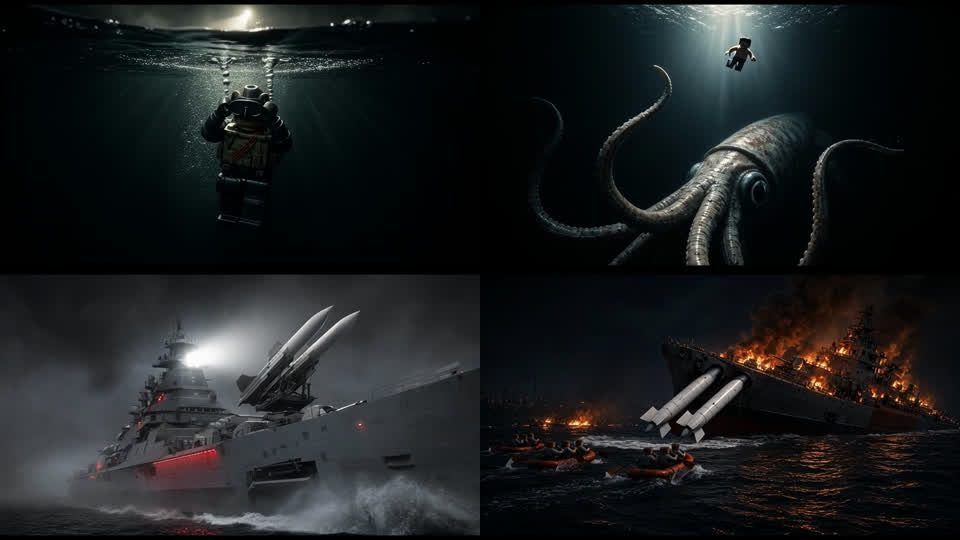
The cutscene clips in Brick & Mortar are AI-generated. They are made with Grok Imagine from storyboard frames, prompts and direction that we wrote, with voices from ElevenLabs, and edited by a person in DaVinci Resolve. The game itself generates no AI content while you play. We say this first, and we say it again in the credits.
The campaign has 29 short movies, about 984 seconds in all: an opener, an intro and outro per mission, an ending, credits and a post-credit scene. This is how we decided to make them.
Attempt one: in the engine, with puppets
On 15 October the owner asked whether the cutscenes could be made without AI video at all. The idea was natural: we already have the world, the LEGO figures, the light, the fire and the smoke, all photoreal-plus-plastic. Why not stage the scenes in the game and film them with our own recorder?
We tried it properly, with the engine and modeller roles, for about two days.
- A scene player (compiled out of the shipped game): one data file per scene with the set, actors, lights, a cut list of camera moves, subtitles and sound. Edit numbers, run one command, get a film in about three minutes.
- Talking figures. A single character was 65 to 67 parts with ten joints, twelve swappable mouths, eight eye states and seven brows. The mouths were printed-face swaps, which is how LEGO animation really does it.
- Lip-sync from our own script, from loudness in the audio and rough phonemes from the text. It passes at normal speed and fails on a big close-up.
- The result. The whole opening rebuilt shot by shot: 79 seconds, 23 cuts, five lip-synced lines. Of 23 cuts, 10 were ready, 12 were stand-ins and 1 was blocked (the kitten had not been modelled).
It looked like our game. And it was slow in the way that matters: every shot needed a set, a rig, a light and a modeller. Our notes list what was still missing for the 79-second opening: a kitten, an alley, a lantern, a ship hull at figure scale, sailors, a quay. It also fought for the same machine as everything else, and a colour bug made dark costumes look grey.
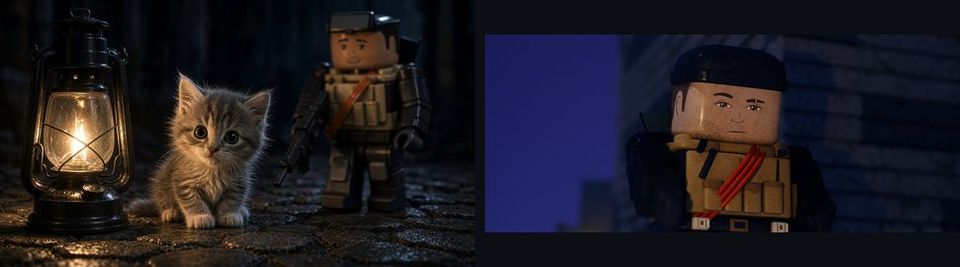
On 18 October the owner decided: no more in-engine cinematics. The cutscenes stay Grok videos. Nothing was deleted; the files stay.
Attempt two: Grok Imagine
The workflow, in the order we do it:
- Storyboard first. Every shot gets a still frame from Grok, made from a style bible and character reference sheets. By 30 September all 218 shots had one, and the owner wrote notes on each before any video was made.
- Image to video. Never text to video. A clip starts from the approved frame, with a motion prompt that has no dialogue, no text and no new characters.
- Is the frame the first or the last? Our best rule. If the still shows the start of the action, it is Grok's first frame and the prompt describes what follows. If it shows the end, such as the hit, the fireball or the revealed face, it is the last frame and the prompt describes the build-up. Every shot records which.
- 480p, shortest length, one take. On 6 October the owner said to make the clips at 480p "so we can make more", the shortest length Grok offers, and never to reroll: the first version goes in. That stretches a limited quota across hundreds of shots, and it makes the prompt and the frame worth the effort.
- Prompts that pass the filter. Prompts describe a technique, never an artist or a film, and ask for no real insignia, brands or readable text. A check on every frame looks for anything that should not be there.
Then DaVinci Resolve
All cutscenes live in one master timeline we call the animatic. It started as stills; a script, resolve_swap_in_place.py, swaps a mission's stills for their clips at the same frame and length, puts Grok's own sound on its own track, and marks every swapped clip so a person can see it. An audit counts shots with a problem; it said 0 of 254.
Scripting Resolve is powerful and has sharp edges we paid for:
- No undo. A script that changes a timeline cannot be taken back with Ctrl+Z. Back up first.
- Ripple inserts. Putting a clip in pushes everything after it.
- Clip frame numbers are source frames, not timeline frames. When the source is 23.976 and the timeline is 29.97, they disagree.
- Frame rates differ. Our timeline runs at 29.97 and some source clips at other rates, so every frame sum has to say which one it means.
Which is better?
| In-engine puppets | Grok Imagine | |
|---|---|---|
| Looks like the game | Yes, exactly | Close, with drift |
| Cost per shot | A set, a rig and a modeller | A prompt and an approved frame |
| Control | Total: move a camera by editing a number | Partial: you ask, it interprets |
| No AI-generated content | Yes | No |
| Speed | Slow: we got through the 15 shots of the opener | Fast: a whole mission's clips in an evening |
What we would do differently
- Decide the AI question before building anything. The in-engine route cost two days, but it was the right test to run once.
- Storyboard before video, always. The frames did most of the directing.
Try it yourself
Make the storyboard first, with the cheapest tool you have, and show it to someone before you generate a second of video.
Next: How the story came together - a writer role, five versions and a handbook with a blank page (20 October 2026)
Related steps
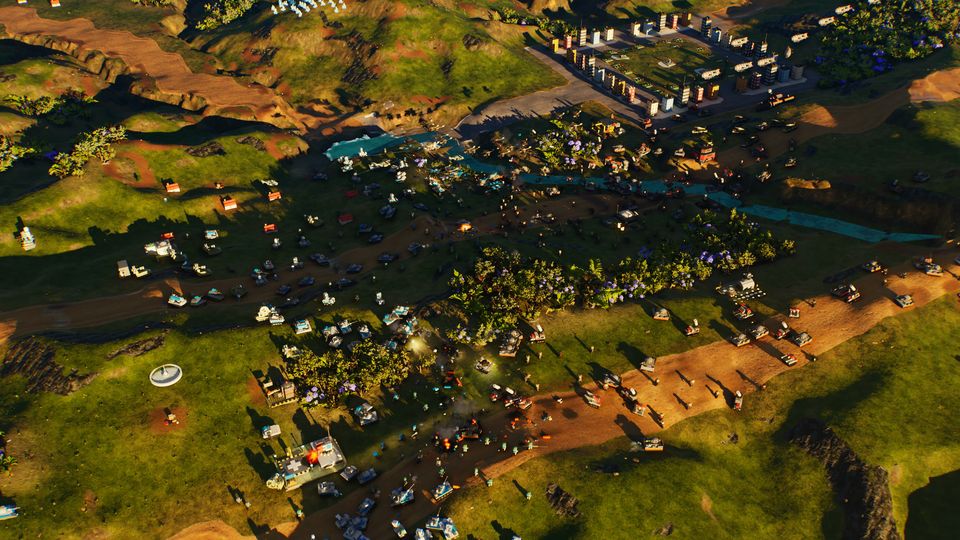
Filming the real game
How we capture trailer footage from the game itself - a recorder that steps in exact frames, a CSV queue that runs overnight, battles that repeat exactly, and the takes we threw away.
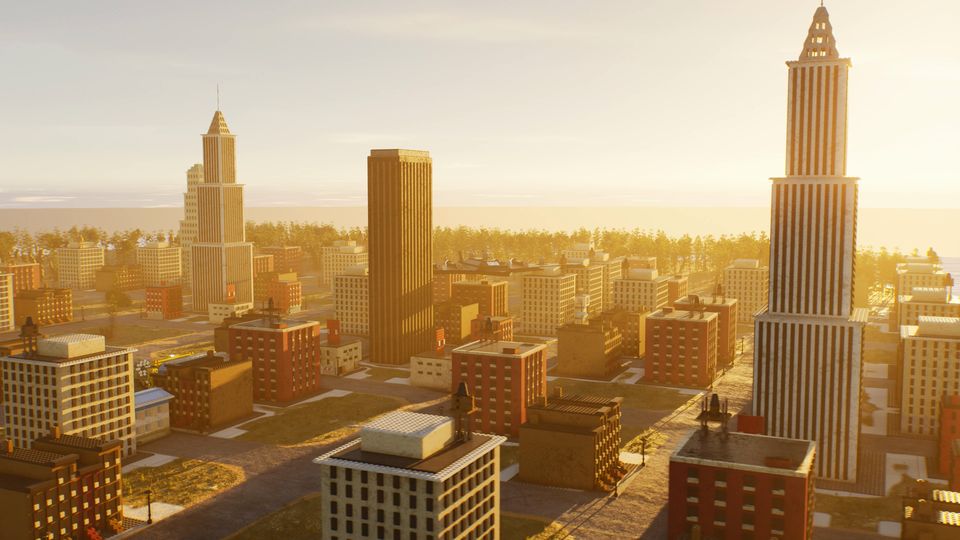
What the AI did, what it did not, and where the humans decided
A plain inventory of every AI tool used on Brick & Mortar - code, models, images, video, voices and music - and the decisions that stayed with a person.
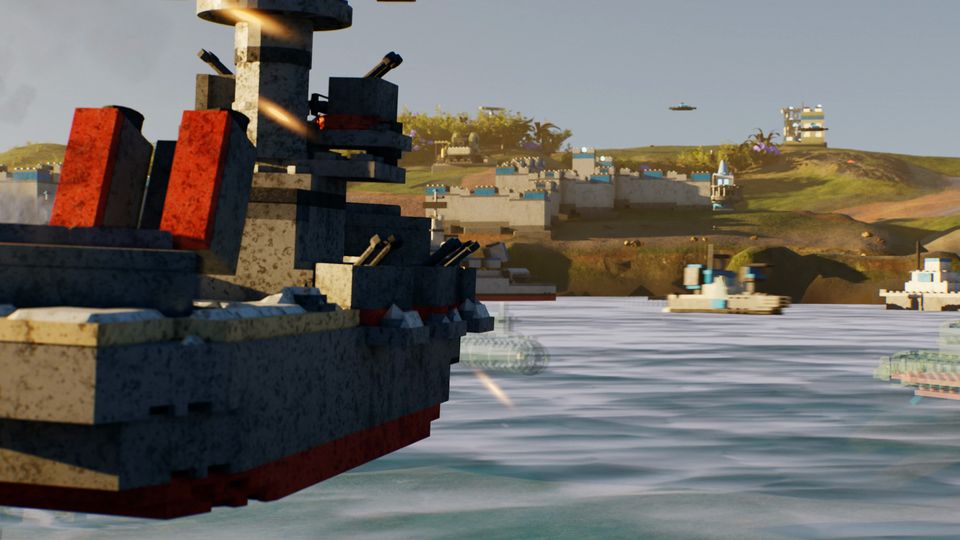
The navy arrives
Ships need water that behaves like water. A one-screenshot bug report led to a rebuilt water layer, new projectiles and a scripted fleet battle we could film.
Written afterwards from our project notes and commit history; dated to when the work happened.